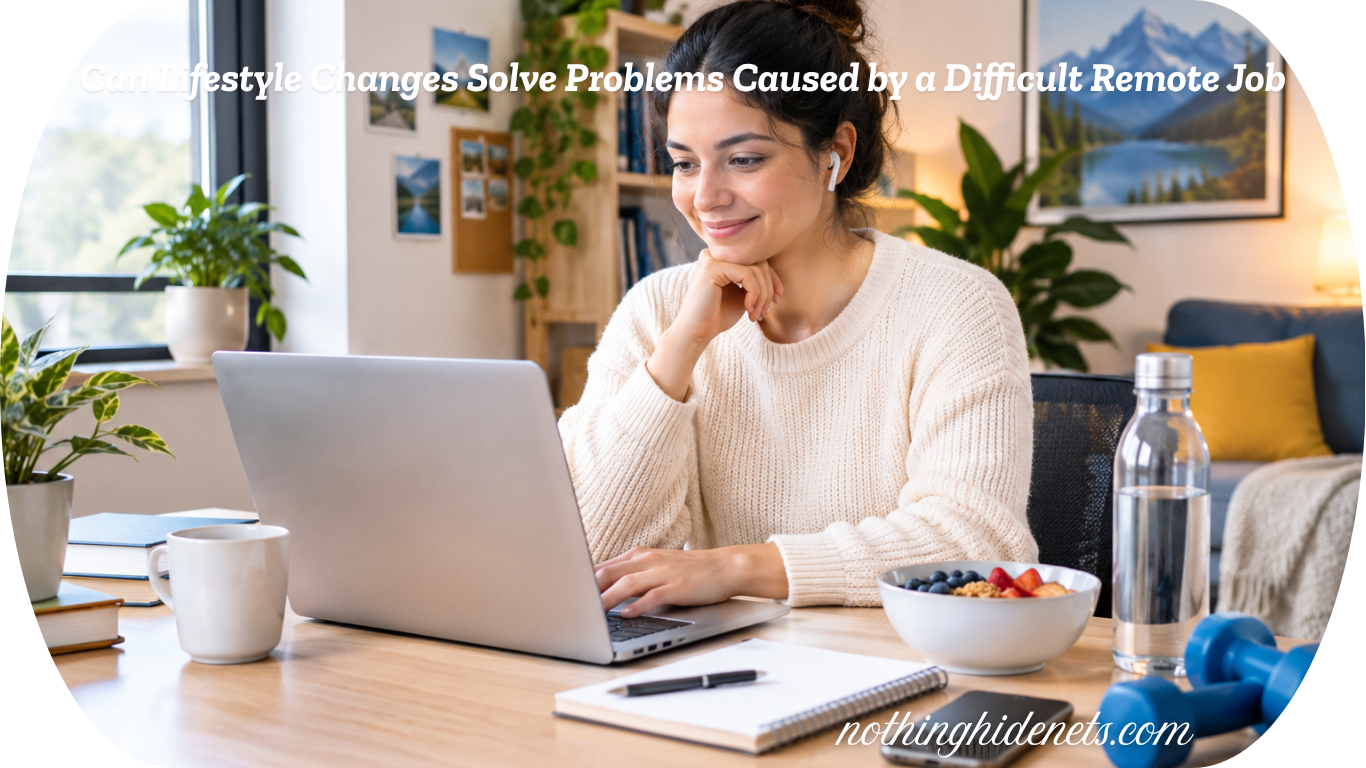
Can Lifestyle Changes Solve Problems Caused by a Difficult Remote Job?
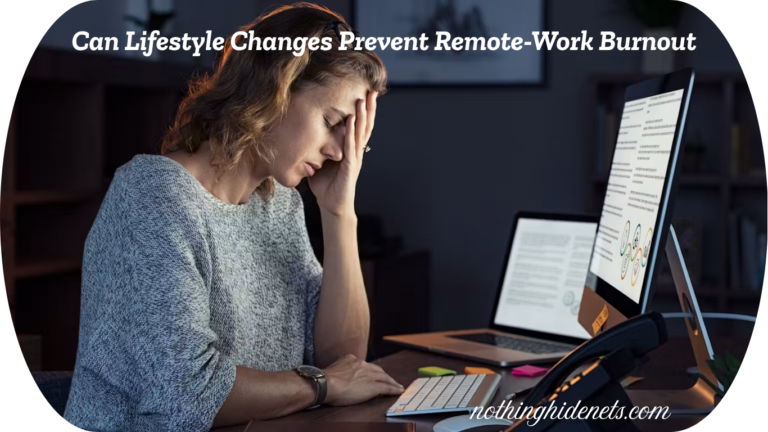
Remote work can offer flexibility, less commuting, and more control over the daily schedule. However, working from home does not automatically make a job easy. A difficult remote job can still create stress, long working hours, isolation, poor work-life balance, communication problems, low motivation, and difficulty separating work from personal life.
This raises an important question: Can lifestyle changes solve problems caused by a difficult remote job?
The short answer is that lifestyle changes can help with many problems, but they cannot solve every problem. Changes such as creating a consistent routine, taking regular breaks, exercising, improving sleep habits, building social connections, and setting boundaries can make remote work more manageable. At the same time, problems caused by excessive workloads, poor management, unrealistic deadlines, harassment, inadequate pay, or an unhealthy workplace culture may require changes at work rather than changes in personal habits.
Remote work remains a major part of the U.S. employment landscape. According to the U.S. Bureau of Labor Statistics, 35% of employed people did some or all of their work at home on days they worked in 2025. This means that understanding how lifestyle and work conditions interact is increasingly important.
What Makes a Remote Job Difficult?
A difficult remote job can mean different things to different people. For one worker, the main problem may be long hours. For another, it may be loneliness or constant video meetings. Someone else may struggle because their employer expects them to respond to messages late at night.

Common problems associated with difficult remote jobs include:
- Long or unpredictable working hours
- Too many meetings
- Constant emails and instant messages
- Difficulty switching off after work
- Social isolation
- Lack of motivation
- Poor communication with managers or coworkers
- Household distractions
- Childcare or caregiving responsibilities
- An uncomfortable home workspace
- Difficulty taking breaks
- Poor sleep routines
- Stress and emotional exhaustion
- Unclear job expectations
- Pressure to always be available
Remote work itself is not necessarily the cause of all these problems. In many situations, the type of job, management style, workload, personal circumstances, and home environment matter just as much.
Research also shows that remote work can have both positive and negative effects. A recent U.S. study using nationally representative data found an association between frequent remote work and higher levels of loneliness, particularly among people working remotely three or more days per week. The researchers also found that working remotely one or two days per week was not significantly associated with loneliness in their analysis.
This suggests that there is no single remote-work experience that applies to everyone.
How a Consistent Remote Work Routine Can Help
A consistent routine is one of the simplest lifestyle changes for remote workers.
Without an office commute or a physical workplace, the beginning and end of the workday can become unclear. A person may wake up, open a laptop, start working immediately, skip breaks, and continue working long after normal working hours.
A predictable routine can create structure.
A basic remote-work routine might include:
- Waking up at a consistent time
- Getting dressed before starting work
- Eating breakfast away from the computer
- Starting work at a planned time
- Scheduling breaks
- Taking lunch away from the desk
- Finishing work at a defined time
- Changing activities after work
- Going outside or exercising
- Following a regular bedtime
Also Read: Can Working From Home Affect a Person’s Social Life? A Complete Guide
The routine does not need to be complicated.
Also Read: Can Lifestyle Tips Help People Who Work From Home? Benefits and Best Practices
The most useful routine is one that is realistic enough to follow on ordinary workdays. A complicated schedule can create another source of pressure.
For some workers, simply creating a clear difference between “before work,” “work,” and “after work” can make the day feel more organized.
Why Work-Life Boundaries Matter When Working From Home
One of the biggest challenges of remote work is the loss of physical separation between work and home.
In an office, leaving the building can provide a natural signal that the workday has ended. At home, the computer may remain on the same desk for hours after the official workday is finished.
This can make it difficult to mentally disconnect.
A simple boundary system can help. For example, a worker could use a specific room, desk, or corner for work whenever possible. At the end of the workday, the worker can close work applications, put away equipment, change clothes, take a walk, or begin another planned activity.
These actions create a transition between professional and personal time.
Digital boundaries can also help. Workers may choose to turn off nonessential notifications outside working hours or avoid checking work email immediately before going to sleep.
Research on work-family conflict shows why these boundaries matter. A 2025 longitudinal study of Australian parents found that working from home had different effects on work-family and family-work conflict depending on circumstances, including gender and family responsibilities.
The broader lesson is that flexibility can be helpful, but flexibility without boundaries can also allow work to enter personal time.
Can Exercise Help With Remote Work Stress?
Regular physical activity can be a useful lifestyle strategy for people dealing with the strain of remote work.
Working from home often reduces incidental movement. A person who works in an office may walk to meetings, move between rooms, travel to work, or walk during lunch. A remote worker may spend most of the day in one chair.
Exercise does not have to mean an intense gym session.
Useful options include:
- Walking outside
- Stretching
- Cycling
- Strength exercises
- Yoga
- Short movement breaks
- Recreational sports
- Household activities that involve movement
Short activity periods can also break up long periods of sitting.
For example, a worker might stand up during a phone call, walk around the home between meetings, or take a short walk during lunch.
The purpose is not to turn remote work into a fitness program. Instead, movement can become a practical way to create separation between long periods of computer work.
Workers who have medical conditions or concerns about starting a new exercise program should consider speaking with an appropriate healthcare professional.
How Better Sleep Habits Can Improve Remote Work Days
Sleep and work routines are closely connected.
A difficult remote job can make it tempting to work late because there is no commute and the workplace is only a few steps away. Someone may finish a task at 9 p.m., check one more message at 10 p.m., and continue thinking about work when trying to sleep.
Over time, inconsistent schedules can make daily life feel less stable.
Basic sleep habits may include keeping a regular sleep and wake schedule, creating a relaxing pre-bed routine, limiting unnecessary work activity late at night, and keeping the bedroom primarily associated with rest.
A worker may also benefit from creating a firm “work is finished” signal. This could be shutting down the computer, turning off work notifications, taking a shower, reading, walking, or spending time with family.
Sleep problems that are persistent, severe, or affecting daily functioning should not automatically be blamed on remote work. Professional medical advice may be appropriate.
Can Social Activities Reduce Remote Work Isolation?
Social isolation is one of the most important issues to consider when discussing difficult remote jobs.
A worker can communicate with coworkers every day and still feel socially disconnected. Online meetings are not always a substitute for informal conversations, shared activities, or face-to-face interaction.
A person working remotely may therefore need to make social interaction more intentional.
Possible options include:
- Meeting a friend for coffee
- Joining a community group
- Taking a class
- Participating in recreational sports
- Visiting family
- Volunteering
- Working occasionally from a suitable shared workspace
- Scheduling regular social activities
The goal is not necessarily to spend more time with coworkers. The goal is to maintain meaningful human connection outside the narrow boundaries of work.
Recent U.S. research provides additional context. A 2026 study examining nationally representative surveys of American workers from 2011 through 2024 reported associations between increased remote work, more time spent alone, and several measures of mental well-being. The researchers noted that the effects were concentrated among people living alone.
This does not mean remote work will cause loneliness for every person. It does suggest that social connection deserves attention when remote work becomes highly isolated.
How a Better Home Workspace Can Reduce Daily Frustration
The physical environment can influence how comfortable remote work feels.
A worker who spends eight hours at a kitchen table with poor lighting and an uncomfortable chair may experience more physical discomfort than someone with a suitable workstation.
A practical home office does not have to be expensive.
Useful improvements may include:
- A comfortable chair
- A desk at an appropriate height
- Good lighting
- A stable internet connection
- A suitable monitor position
- A keyboard and mouse that feel comfortable
- Enough space to organize work materials
- Reduced visual clutter
- A quiet area when possible
Ergonomics also matters. The screen should generally be positioned so that the worker does not need to remain in an awkward position for long periods.
However, workers should not assume that every physical problem can be solved by buying office equipment. Persistent pain or other concerning symptoms may require professional evaluation.
Can Time Management Make a Difficult Remote Job Easier?
Time management can be especially important when the workday has few natural boundaries.
A worker may start with a long list of tasks and spend the entire day reacting to emails, meetings, messages, and unexpected requests.
One approach is to separate important work from reactive work.
For example, a worker could identify two or three important tasks for the day before opening less urgent communication channels. Another option is to reserve blocks of uninterrupted time for tasks that require concentration.
Useful strategies include:
- Creating a short daily priority list
- Grouping similar tasks together
- Scheduling focused work periods
- Setting realistic deadlines
- Leaving space for unexpected tasks
- Limiting unnecessary meetings
- Taking regular breaks
- Reviewing unfinished tasks at the end of the day
Time management should not become a reason for working longer hours.
The objective is to use available working time more deliberately rather than trying to fit an unlimited amount of work into every day.
Research from the U.S. Bureau of Labor Statistics has also found a positive relationship between remote work and total factor productivity in recent research, although productivity varies by industry and circumstances.
This is another reason to avoid assuming that remote work is automatically less productive or more productive. The actual outcome depends on how the work is organized.
How Digital Boundaries Can Protect Personal Time
Remote jobs often depend on digital communication.
Email, Slack, Microsoft Teams, project management platforms, text messages, and video meetings can make it easy for work to follow someone throughout the day.
The problem is not communication itself. The problem can occur when communication becomes continuous.
Digital boundaries can include:
- Turning off nonessential notifications
- Using status indicators honestly
- Setting realistic response expectations
- Avoiding unnecessary work messages outside working hours
- Keeping personal and work accounts separate when practical
- Closing work applications at the end of the day
- Using scheduled email checks instead of constantly monitoring the inbox
Workers should also understand their organization’s expectations before changing communication habits. Some jobs require urgent availability, while others do not.
A useful conversation with a manager can clarify which messages actually require immediate responses.
Can Breaks Improve Focus During Remote Work?
Taking breaks may seem difficult when workloads are high, but continuous screen time can make the workday feel more exhausting.
Short breaks can provide an opportunity to stand, stretch, drink water, step outside, or simply look away from the screen.
A break does not necessarily mean scrolling through another social media application.
A better break might involve changing the type of activity.
For example, after an hour of computer work, a person could stand up and walk around for a few minutes. During lunch, they might eat away from the workstation rather than continuing to work.
The key is consistency.
A worker who takes one long break only after becoming exhausted may get less benefit from breaks than someone who builds small pauses into the workday.
How Family and Household Boundaries Affect Remote Work
Working from home can create the impression that a person is always available.
Family members may assume that being at home means being free. At the same time, the worker may assume that they can handle household chores during work hours.
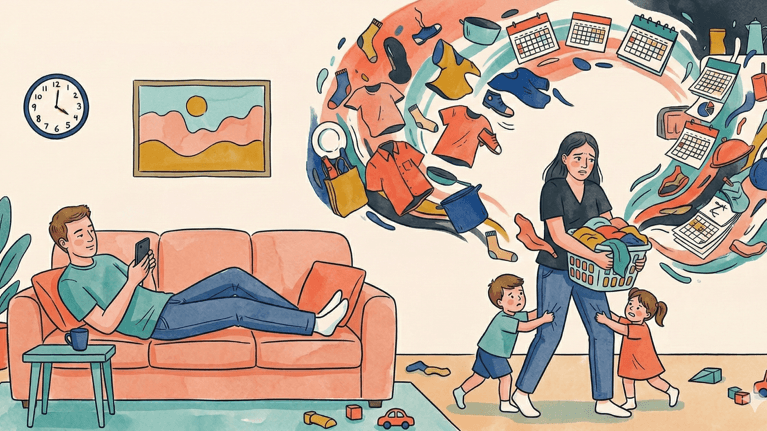
This can create competing demands.
Clear communication can reduce some of this friction.
For example, a worker might explain:
“I am home, but I am working between 9 a.m. and 5 p.m. Unless something is urgent, I need uninterrupted time during those hours.”
Visual signals can also help. A closed door, headphones, a calendar status, or a specific workspace may communicate that the person is currently working.
Research on telework and family responsibilities shows that the effects of working from home are not identical across households. A 2024 study found that having children or caregiving responsibilities can influence work functioning during telework.
This is important because a lifestyle solution that works for one household may not work for another.
When Lifestyle Changes Are Not Enough
Lifestyle changes have limits.
If a remote worker has an unrealistic workload, changing their morning routine will not remove the workload. If a manager sends messages at midnight and expects immediate responses, meditation alone will not fix the communication problem.
Some warning signs that the underlying work situation may need attention include:
- Regularly working far beyond scheduled hours
- Constant pressure to respond immediately
- Unrealistic deadlines
- Persistent understaffing
- Lack of role clarity
- Frequent last-minute changes
- Harassment or discrimination
- Fear of taking normal breaks
- Pressure to work while sick
- Repeated inability to disconnect
- Severe conflict between job demands and personal responsibilities
In these situations, the appropriate response may include discussing workload with a manager, documenting work expectations, using available human resources procedures, requesting reasonable adjustments where applicable, or considering whether another job arrangement is necessary.
Lifestyle changes can support a worker, but they should not be used to place all responsibility on the individual.
How to Talk to a Manager About a Difficult Remote Job
A worker does not always need to make a dramatic complaint.
A practical conversation can focus on specific problems and possible solutions.
Instead of saying:
“My workload is impossible.”
A worker might say:
“I currently have five high-priority projects with overlapping deadlines. Could we review which two should take priority this week?”
Instead of:
“I am overwhelmed by meetings.”
A more specific approach could be:
“I have several recurring meetings that overlap with project work. Could we review which meetings require my attendance?”
Clear examples make workplace problems easier to discuss.
It can also help to document recurring issues. A simple record can include dates, deadlines, meeting demands, hours worked, and changes in priorities.
The purpose is not to create conflict. It is to create a clearer picture of what is happening.
Can Hybrid Work Be a Lifestyle Solution?
For some workers, a hybrid arrangement may provide a middle ground.
Remote work can offer flexibility, while occasional in-person work can provide social interaction, collaboration, and a clearer separation between professional and personal environments.
Pew Research Center reported in 2025 that among U.S. workers with jobs that can be done from home, many identified work-life balance as an important benefit of their current arrangement. At the same time, many workers also reported difficulties such as interruptions and maintaining motivation.
Hybrid work is not automatically better for everyone. It can introduce commuting, scheduling, and coordination challenges.
The important point is that work location is one variable among many.
For some people, two days in an office may solve a social problem. For others, the commute may create more stress than the office interaction removes.
This is why personal circumstances and job requirements matter.
How Employers Can Help Remote Workers
It is also important to recognize that remote-work problems are not solely the employee’s responsibility.
Employers can influence the quality of remote work through management practices.
Helpful employer practices may include:
- Clear performance expectations
- Reasonable workloads
- Predictable schedules
- Respect for nonworking hours
- Effective communication systems
- Fewer unnecessary meetings
- Access to appropriate technology
- Support for collaboration
- Clear policies for remote workers
- Opportunities for professional development
- Regular but reasonable manager check-ins
A healthy remote-work environment requires both individual and organizational effort.
Research from the U.S. Bureau of Labor Statistics and other organizations continues to show that remote and hybrid work are now established parts of the U.S. labor market rather than temporary exceptions.
That makes good remote-work management increasingly important.
A Practical Lifestyle Plan for a Difficult Remote Job
Someone who feels overwhelmed does not need to change everything at once.
A simple plan can start with a few changes.
During the first week, the worker might establish fixed start and finish times. They can also choose one place in the home for work and take lunch away from the computer.
During the second week, they might add regular movement breaks and one or two planned social activities.
During the third week, they can review digital boundaries, notifications, meeting schedules, and after-hours communication.
During the fourth week, they can assess what has changed.
Questions to ask include:
- Am I working fewer unnecessary hours?
- Do I stop thinking about work more easily?
- Am I taking regular breaks?
- Am I moving more during the day?
- Am I sleeping more consistently?
- Do I have enough social interaction?
- Are household responsibilities still interfering with work?
- Is the workload itself still unreasonable?
- Do I need to discuss any work problems with my employer?
This approach is more realistic than attempting a complete lifestyle transformation in one weekend.
What Does the Evidence Say About Remote Work and Well-Being?
The research does not support a simple conclusion that remote work is either good or bad.
Different studies identify different outcomes.
Pew Research Center has reported that many U.S. workers with teleworkable jobs value remote work for work-life balance, while some also report challenges with motivation and interruptions.
The U.S. Bureau of Labor Statistics reports that working from home remains common in the United States, with 35% of employed people doing some or all of their work at home on days they worked in 2025.
At the same time, recent research has drawn attention to isolation and loneliness among people who work remotely frequently.
Research on work-family conflict also shows that working from home can affect people differently depending on family structure, caregiving responsibilities, gender, and other circumstances.
Taken together, the evidence suggests that remote work is not a single experience.
The outcome depends on the worker, the job, the home environment, the employer, the amount of remote work, and the boundaries surrounding that work.
How to Know Which Problem You Actually Need to Solve
Before changing your lifestyle, identify the main problem.
If you are exhausted because you work until midnight, the solution may involve workload and boundaries.
If you are lonely because you rarely interact with people in person, social activities may help.
If you cannot focus because your home is noisy, changing your workspace may help.
If you feel physically uncomfortable, ergonomics and movement may help.
Also Read: Can N2H Lifestyle Tips Work If I Have a Long Commute? A Practical Guide
If you are constantly anxious because your manager changes priorities every few hours, better time management alone may not solve the issue.
Also Read: What Is the Easiest N2H Lifestyle Habit to Start With?
A useful exercise is to complete this sentence:
“My remote job would feel significantly easier if ______.”
The answer can reveal the actual problem.
If the answer is “I had more control over my schedule,” lifestyle and workplace changes may both be relevant.
If the answer is “My employer reduced my workload,” the main solution is probably not a lifestyle change.
If the answer is “I had more social interaction,” building a social routine may be useful.
This simple distinction can prevent workers from trying to fix the wrong problem.
Conclusion: Can Lifestyle Changes Solve Problems Caused by a Difficult Remote Job?
Lifestyle changes can help reduce many difficulties associated with remote work, but they cannot solve every problem caused by a difficult remote job.
A consistent routine, regular movement, better sleep habits, social connection, a comfortable workspace, digital boundaries, planned breaks, and clear separation between work and personal time can make remote work easier to manage.
However, these strategies should not be treated as a replacement for healthy workplace conditions.
If the real problem is an excessive workload, unreasonable deadlines, poor management, harassment, unclear expectations, or constant pressure to remain available, the underlying work situation may need to change.
The most useful approach is therefore a balanced one. Improve the parts of daily life that are within your control while also recognizing the problems that require communication or action at work.
Remote work can provide flexibility, but flexibility works best when it comes with reasonable expectations and clear boundaries. The goal is not simply to become better at tolerating a difficult job. The goal is to create a sustainable way of working that supports both professional responsibilities and personal life.
Frequently Asked Questions
1. Can changing my daily routine really make remote work less stressful?
Yes, a structured routine can make remote work more predictable and can reduce some forms of daily stress. Starting and ending work at consistent times, taking planned breaks, eating away from the desk, and creating an end-of-day transition can make the workday easier to separate from personal time. However, a routine cannot fix an excessive workload or serious workplace problems.
2. Should I stop working remotely if it is affecting my social life?
Not necessarily. The effect of remote work on social life differs between people. Some workers can maintain strong relationships through activities outside work, while others may need more regular face-to-face interaction. A hybrid schedule, coworking arrangement, community activity, or regular social plans may be options to consider before deciding that remote work itself must end.
3. Can lifestyle changes prevent remote-work burnout?
Lifestyle changes may reduce some factors that contribute to exhaustion, such as poor sleep, lack of movement, weak boundaries, and inadequate recovery time. However, burnout-like symptoms can also be connected to excessive job demands and workplace conditions. If the workload remains consistently unreasonable, personal lifestyle changes alone may not be sufficient.
4. Is working from home unhealthy for everyone?
No. People respond differently to remote work. Some workers value the flexibility, reduced commuting, and ability to manage personal responsibilities. Others may struggle with isolation, distractions, blurred boundaries, or reduced separation between work and home. Research shows mixed outcomes, so individual circumstances matter.
5. What is the first lifestyle change to make when a remote job feels overwhelming?
Start by identifying the main source of the problem rather than changing everything at once. If the biggest issue is working too late, establish a clear end-of-day boundary. If isolation is the problem, schedule meaningful social activities. If distractions are the issue, improve the workspace. If the workload itself is unreasonable, consider discussing priorities and expectations with your manager. The first change should target the problem that has the greatest effect on your daily life.